
Familial Trafficking: History, Consequences, and Clinical Recommendations
Abstract
Familial trafficking is a form of human trafficking that refers to the trafficking being perpetrated by family members. While more research is available on familial sex trafficking, minors have also been exploited in other forms of human trafficking, such as labor trafficking (e.g., in manufacturing, agriculture, domestic servitude, begging, and criminal activities). The involvement of family members varies and may consist of ongoing exploitation. At the same time, the child lives at home or a decision to “sell” the child to traffickers in exchange for money, debt reduction, drugs, and more. Historically, there has been evidence globally of various practices that could today be defined as familial trafficking. The reasons behind familial trafficking are complex and related to several factors, such as culture, community, and individual characteristics of each family member. The framework of risk factors frequently used in human trafficking studies can shed some light on the driving forces of familial trafficking. The consequences of being trafficked by a family member are delineated, and treatment considerations are offered.
Eventually, … he had convinced my mom for me and my two younger sisters to come and stay with him and to live with him, so I believe that there was some commercial exchange between them for my mom just to give up her kids, and I didn’t see her for probably about a period of three years. … there were five children total in his house… but what happened was he started introducing me to pornography…. he began molesting me and touching me …, but what he would do was use, I guess, manipulation and really coercion tactics to let me know that I was a motherly figure, and these things were normal, and this was his way of showing me love and affection and protection.
During the day, it was my job to take care of the kids…and then at nighttime, I would be raped multiple times; sometimes, if he was upset or I was in trouble or something …I would be separated from the kids… he would lock me in a room away from them…I felt like I couldn't do anything to help them, I couldn’t do anything to protect them… and then we also were just introduced to a lot of child pornography. He would use us just for different videos and photos and things like that, and especially use my two younger sisters and the two younger boys for just child pornography purposes. - Author, 2022
Familial Trafficking as a Form of Human Trafficking
The United Nations’ definition of human trafficking is “the recruitment, transportation, transfer, harboring or receipt of people through force, fraud or deception, to exploit them for profit” (V-TVPA, 2000). Everyone can be a victim of this crime regardless of age, background, or gender. Frequently, the use of violence or fraudulent employment agencies and fake promises of job opportunities and education are the means to coerce and trick victims. Child labor and sex trafficking are distinguished from other forms of exploitation. Child labor trafficking occurs when a trafficker utilizes force, fraud, or coercion to compel the child to provide labor or services. Child sex trafficking, however, does not require the presence of force, fraud, or coercion (UNODC, n.d.). This article focuses on a specific form of human trafficking, familial trafficking—where family members are the traffickers.
History of Familial Trafficking
Familial trafficking dates back thousands of years. Perhaps one of the earliest examples is the story of Joseph being sold to slavery by his brothers as recorded in the Bible (New International Version Bible, 2011), in the books of Genesis 12 and Acts 7:9. Familial trafficking, in this case, was suggested as a “lesser evil” compared with killing Joseph whose brother was jealous of him and did not want to see him ever again.
Unlike with the story of Joseph, the motives for familial trafficking would have most likely been related to financial hardships endured by caregivers, unable to provide for the basic needs of their children. Vuolanto (2003) offers a detailed historical account of selling children throughout the Roman Empire; while morally condemned as wrong, it was nonetheless a reality, especially in extreme poverty, famine, and calamities. Similarly, in his extensive account of human trafficking in medieval Europe, Paolella (2020) includes some regulated forms of familial trafficking, such as parents selling children or husbands selling their wives to servitude.
As people began to travel more extensively during the colonialism era, some cases of familial trafficking would take place involving individuals from different cultures. For example, there is a historical record of Dutch missionaries purchasing local children in Dutch New Guinea in the late 19th century (Mak, 2020).
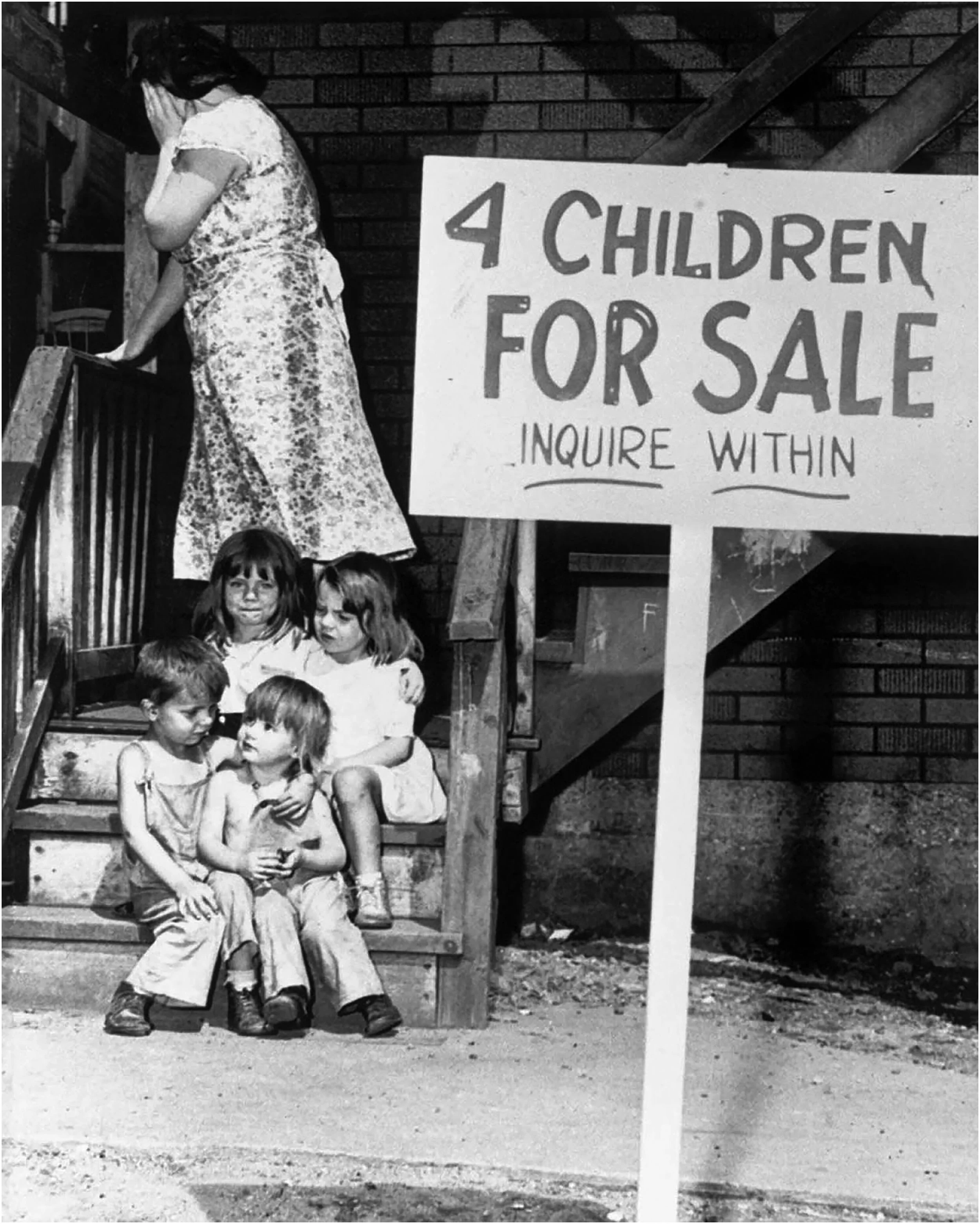
As recently as 1948, a photograph of “Four Children for Sale” in Chicago (Figure 1) demonstrated that selling children was also a reality in the United States. In this case, the parents were selling their four children: a pregnant mother and an unemployed father (Rare Historical Photos, 2023).
Current Awareness of Familial Trafficking
Much like what occurred in the field of child abuse and interpersonal violence, where initially it was not recognized nor acknowledged, a similar phenomenon is taking place among antitrafficking professionals—there is increasing awareness that parents, both biological and adoptive, and other family members can be human trafficking perpetrators. This is not a recent development, but our awareness is.
Family members’ involvement may vary from allowing access to their child in exchange for money or drugs on a regular or occasional basis to handing over the child to exploiters permanently, as witnessed in the opening case vignette. In any case, the fact that trafficking begins or occurs with the agreement of a caregiver makes it much more difficult for the victim to report and for the authorities to detect (Allert, 2022; Msuya, 2019). While data on perpetrators in familial trafficking is still limited, some researchers in the United States suggest that it is more common for mothers to be the traffickers (Allert, 2022; Reed et al., 2019; Roe-Sepowitz et al., 2015; Sprang & Cole, 2018). Reed et al.'s study found that 63% of mothers, as opposed to 37% of other family members, such as cousins, uncles, and fathers, trafficked their children (2019). Similar findings indicated that biological mothers were the perpetrators in 63%–64.5% of the cases in Sprang and Cole's study (2018). Another study found that if the exploiter was a caretaker or guardian, they were more likely to be female (Roe-Sepowitz et al., 2015).
For familial trafficking to occur, there needs to be some gain for the caregiver resulting from the exploitation of the minor entrusted to them. A clear distinction between familial sex trafficking and incest or domestic sexual abuse of minors is the presence of an economic gain. In contrast, what differentiates minor sex trafficking from familial sex trafficking is the unique relationship between the victim and perpetrator (Allert, 2022) as a caregiver known to the child and responsible for their well-being. In essence, a family member acts as a trafficker in facilitating the recruitment, transportation, transfer, or harboring of a child, receiving some economic gain. In some cases, familial trafficking may be accompanied by incest, so while these two forms of abuse are distinct, they may co-occur.
What means of control are used in familial trafficking? Familial traffickers utilize the same strategies that nonfamilial traffickers employ to manipulate and control their victims (Henderson, 2022). Recent research reports that force was the most common and often also took the form of physical or sexual abuse by family members before the experience of being trafficked (White et al., 2023). Other forms of control over vulnerable family members may include manipulation into compliance through the promise of rewards (emotional connection or purchases of desired object (e.g., toys, make-up, electronic device)) or punishment (physical abuse, killing a pet), or through threats or verbal aggression (threats of homelessness or abuse) (Henderson, 2022).
Who is a child? In this article, a child is any person under 18, which aligns with the definition proposed by the United Nations (1989). This broad category includes children yet to be born, infants, toddlers, preschoolers, school-aged children, and adolescents. Familial trafficking may occur at each one of those stages. This article will focus on familial child trafficking while we acknowledge that familial trafficking of adults also takes place.
As evident in a 2021 U.S. study, which represented the most significant sample to date, there were confirmed cases of familial sex trafficking with 900 victims across all ages. The minor victims ranged in age from infants to 17 years old; 72% were aged 14–17 years old; 20% were aged 10–13 years old, 6% were aged 6–9 years old, with 1.4% 1–5 years old, and less than 1% were infants (Allert, 2022).
Unborn/Infants
Pregnant women may be offered money in exchange for their children. For example, Van Nguyen et al. (2020) report that Vietnamese future mothers who experience unintended pregnancy are offered $3,000 for their babies. In China, parents sell their unwanted newborn infants, and in some cases, married couples decide to have children for financial gain (Shen et al., 2013). For couples or individuals who desire to have a baby and for various reasons do not see adoption as a viable option, “paying” traffickers for a child may constitute a form of familial trafficking if the parent is receiving the money or a portion of it (Kabo, 2014). Some women who have been trafficked themselves are forcefully made pregnant by the traffickers who, as fathers of the unborn child, may already place the baby in an auction even before it is born (Evans, 2020). In the most favorable scenario, such a baby will be “sold” to caring parents. However, because of the criminal nature of the transaction, there is no guarantee that it will not become “sold” to someone who wants to exploit it in sex or labor trafficking (Kostenzer, 2017).
Children
Children trafficked by a family member in the United States were significantly younger than those trafficked by nonfamily members (Allert, 2022; Edwards et al., 2022; Middleton et al., 2019; Raphael, 2020; Reid et al., 2016). Raphael (2020) notes that U.S. familial sex trafficking of children includes very young children. In those cases, it is not unusual for the father to sexually abuse their child at a young age (e.g., 3 years old) and then subsequently revert into familial trafficking to seek monetary gain (e.g., to pay off ongoing gambling debts). In the case study by Raphael (2020), the father regularly (weekly) brought his daughter to a house where several men raped her while he collected the money from the time she was nine until 15. Other survivors interviewed by Raphael (2020) stated that with children, the power imbalance was a significant phenomenon that predators sought. Also, children's requests for help are often met with disbelief, as most bystanders tend to believe that parents and other family members have their best interests at heart.
Familial trafficking seems also prevalent in cases of migrant children exploited in the United States for prostitution; in a study by Gozdziak (2016), out of 140 migrant children trafficked, all of them were brought to the country by their parents, and only three of them indicated no parental involvement in their abuse. Across many cultures, parental authority (Greenbaum et al., 2023; Herman, 2000) may be used as a mechanism to coerce children into human trafficking and to continue to maintain the abusive situation.
Adolescents
Frequently, familial trafficking data about children and adolescents is grouped, for example, in the studies in the United States quoted by Jaeckl and Laughon (2021), where 82% of 31 victims aged 6–17, parents trafficked their children for drugs. Adolescent victims of familial trafficking often have a history of prior sexual abuse that continues from their childhood (Edwards et al., 2022). While there is no data available on whether it appears more common for adolescents to have been continuously trafficked as children rather than brought into trafficking after reaching puberty, recent research confirms that both of these scenarios do take place (White et al., 2023). Greenbaum et al. (2023) suggest that while adolescence constitutes a typical age when a child is first exploited in sex trafficking, in the case of familial trafficking, the exploitation usually begins earlier. When familial trafficking begins during the teenage years (the crucial time for identity formation), adolescents assert their independence but still crave and require parental acceptance, comfort, and support (Schwartz, 2015). Some abusive caregivers notice this transition in their children and initiate familial trafficking during this stage of development, when a teenager may be receiving new attention from adults willing to pay for sex.
Forms of Familial Trafficking
Martinho et al. (2020) state that child trafficking continues to be a hidden crime, with many unreported cases. Due to a general assumption that family members want the best for their child, familial trafficking is even less likely to be reported, with the caregiver acting as a perpetrator or receiving some form of financial gain. The Counter-Trafficking Data Collaborative (CTDC) of the International Organization of Migration (IOM, 2023), which is the world's first multistakeholder, with one centralized repository of data from over 91,000 cases, with 169 nationalities exploited in 172 countries, reports that family involvement in child trafficking includes caregivers acting as a recruiter for 41% of minors compared with 9% of adult victims. This data portal populated by multiple human trafficking agencies (IOM, 2023) also reports that family members are “more likely to be involved in trafficking of boys (61% of cases) than girls (46% of cases).” In contrast, other studies have indicated a higher percentage of girls trafficked by their families (Edwards et al., 2022; White et al., 2023). This seemingly contradictory data may be explained by considering the form of trafficking: families seem to be more likely to sell boys into labor trafficking and girls into sex trafficking (IOM, 2023; Reid et al., 2016). The most widespread forms of exploitation include sex and labor trafficking, with an increasing amount of research available in both areas.
It is noteworthy that poly victimization of trafficked children may include different forms of exploitation that overlap over the months or years. Often, a child sold by their parents may experience re-victimization as various forms of trafficking overlap. For example, what initially begins as domestic servitude, which is a form of labor trafficking, may turn into sex trafficking if the traffickers also decide to take photographs of the child destined for pornography and decide to use the child for sexual gratification.
Recently, there has been increasing attention paid to exploitive transnational adoptions, where some adoptions have elements resembling trafficking. Very little is known, however, about familial trafficking for organ trafficking or child soldiers. Most research indicates that the recruitment of child soldiers are minors taken by force from their families (Kizilhan, 2019; Pašagić, 2019).
Sex Trafficking
Familial sex trafficking has been by far the form of exploitation with the highest number of research studies and publications available. In their chapter on family-facilitated juvenile sex trafficking, Reid et al. (2016) note two primary forms of sex trafficking: child pornography and prostitution of minors. In the United States, the phenomenon of family-controlled trafficking is becoming more recognized, although still assumed to be significantly under-reported (Allert, 2022). This under-reporting is due to many reasons, in part to lack of awareness, the general public not even considering that a family member would exploit their child for profit, to the knowledge that sexually abused children in their home are less likely to report their abuse (Herman, 2000). The 2021 U.S. State Department Trafficking in Persons Report focused a section on familial sex trafficking as a Topic of Special Interest, acknowledging that it is an area that desperately needs greater attention. It is also essential to note that some children and youth are trafficked for sex; there is a family history and culture of survival sex, which gets normalized and seen as the family business (Miccio-Fonseca, 2017).
Labor Trafficking
Based on the definition reported in the introductory section, labor trafficking refers to “the recruitment, transport, provision, or obtaining of a person for labor or services through the use of force, fraud, or coercion” (Nichols et al., 2022, p. 6). While Nichols et al. (2022) consider familial trafficking only as a typology of sex trafficking, other authors (Greenbaum et al., 2023) recognize that caregivers may choose to act as facilitators or perpetrators of labor trafficking.
Gibbs et al. (2020) note that in the United States, children are particularly vulnerable to labor trafficking if the perpetrator is a relative. Even though these authors do not use the term familial trafficking, they acknowledge how the exploitation of a child in labor can be facilitated by or related to the caregivers’ situation in terms of family finances, relationships, or immigration status. Those authors enlist several forms of labor trafficking of children, including “traveling sales crews, peddling rings, begging rings, and restaurants or food service” (Gibbs et al., 2020, p. 436); they also highlight that family members and caregivers were the adults most commonly identified as those coercing youth into forced drug sales.
In many countries, child labor perpetuated by family members takes place in the context of bonded labor, where children work in agricultural settings “to pay off debts incurred by their parents or guardians,” often starting at a very young age, as in India (Srivastava, 2019, p. 636). Typically, that occurs in the context of poverty and lack of education of parents or caregivers. Likewise, in Ghana, child trafficking seems to mainly occur in the agricultural sector (cotton, cashew, and cocoa farming), deep-water fishing, and artisanal or small-scale mining (Koomson & Abdulai, 2021). While those researchers warn against the limitations and inadequacy of Westernized understanding of childhood, in their findings based on interviewing boys within fishing communities, they note that some participants self-identify as “sold as commodities” (Koomson & Abdulai, 2021, p. 42), with their parents receiving money when the son was taken away to work, which meets the definition of familial trafficking.
Not every instance of child labor perpetuated by parents merits classification as familial trafficking. Following interviews with working children and adolescents in Bolivia and Ecuador, Jijon (2020) concluded that the practice of child labor as street vendors, retail workers, workshop helpers, domestic workers, or market traders should be understood in the context of relational dignity where being able to make money for the family is an expression of love. Similarly, Rafferty (2021) highlights the concept of “filial piety” (p. 11) related to the expectation that children will support and assist their families. This in turn may often lead to the lack of self-identification of victims of exploitative labor in Southeast Asia. Therefore, a series of cultural assumptions and historical background, as well as economic and political reality, should be taken into account when considering familial trafficking for exploitation in labor.
Forced Marriage
Forced marriage can be another form of human trafficking. Quite often, it involves the consent of family members of a minor (usually a girl). A foundation is created for framing forced marriage as a form of familial trafficking, especially when there is a monetary or other type of gain for the caregivers. In many majority world countries,1 forced marriage relies on traditional customs, such as the cultural practice of “Ukuthwala” in South Africa, bride kidnapping, where a man abducts a young girl and forces her into marriage, often with the consent of her parents (Yesufu, 2020). In the United States, families may also choose to sign paperwork authorizing the marriage of a minor with her abuser due to reasons such as shame or financial gain. Franchino-Olsen et al. (2022) classify forced marriage as a form of commercial sexual exploitation of children in the United States.
Transnational Adoption
Transnational, also referred to as international or intercountry adoptions, grew in popularity following World War II, with at least 50,000 taking place from 1948 to 1969 (Voigt & Brown, 2013), with the height being in 2005, when almost 46,000 transnationally adopted children (Montgomery & Powell, 2018). However, by 2015, transnational adoption dropped by 72% (Montgomery & Powell, 2018). One of the main reasons cited for this significant decrease was adoption scandals. Sending countries, including Ethiopia, South Korea, Russia, China, and Guatemala, to name a few, all former leaders in allowing foreigners to adopt their children were accused of trafficking or kidnapping babies (Montgomery & Powell, 2018; Rahal, 2020). Every major sending country has experienced accusations of child trafficking as birth parents received payments to relinquish their babies (Montgomery & Powell, 2018).
Once adopted, it is assumed that the vast majority of transnationally adopted children do not experience exploitation; there are, however, known situations of exploitation with adopted children. One noted example of exploitation of a transnational adoptee is Masha Allen, who was adopted from Russia by a U.S. pedophile. She experienced sexual abuse, and pornographic photos of her were sold on the Internet (Bastardette, 2006).
The Reasons Behind Familial Trafficking
Familial trafficking, like other forms of child trafficking, constitutes a violation of human rights (Martinho et al., 2020). On the surface, the very idea of agreeing to or facilitating the exploitation of a family member seems to contradict social norms in most societies. Nonetheless, familial trafficking is a phenomenon that currently occurs globally. To understand why it takes place, one should consider several levels, from individual or personal, through relationships and community, to larger systems that govern human interaction. This approach to vulnerability factors in child trafficking is known as the social–ecological model of risk (Nazer & Greenbaum, 2020).
Financial Gain
When thinking of the crime of human trafficking in general, the main reason that comes to the forefront of a complex series of explanations why people choose to become perpetrators is related to financial gain. Likewise, in familial trafficking, parents or other caregivers who sell their children do so because of the money involved. In sex trafficking, the term commercial sexual exploitation of children implies financial gain. Similarly, in labor trafficking, someone (not the victim) profits from the child's work. While traffickers typically gain much more money than they offer to family members.
Nonetheless, that initial amount is attractive enough to caregivers/family members who make the decision. Financial gain, however, does not necessarily mean that the family of the victim is experiencing poverty or homelessness. Several authors from Nigeria point out greed as the mechanism behind familial trafficking (Badejo et al., 2021; Ezeh & Oli, 2021; Fan, 2021). In cases when prostitution is the occupation by mothers of the girls exploited in familial trafficking, intergenerational transmission of that approach may occur, justifying commercial sexual exploitation of adolescent girls for the reasons of financial gain framed as work (Charnley & Nkhoma, 2020).
In some cases of transnational families, children of migrant or refugee parents are left with relatives or extended family members in the country of origin. The greed of those caregivers may result in familial trafficking, for example, as in the case of “selling children into pawnshops” in Cameroon (Feldman-Savelsberg, 2020, p. 44).
Addiction
The desperate need to support one's drug addiction has led parents to traffick their children to support their addiction habit (Allert, 2022; Middleton et al., 2019; Miller-Perrin & Wurtele, 2018). The most extensive study in the United States, with a sample size of 917 familial trafficking cases, found that the exchange of sex acts for drugs in 75.4% of their cases (Allert, 2022). Research has shown that opioid addiction and poverty in the United States can fuel the motivation to traffick (Henderson, 2022). An extreme example of exchanging sex for drugs occurred in Fayetteville, North Carolina, United States, where a mother, Antoinette Davis, allowed Mario Andrette McNeil to take her 5-year-old daughter, Shaniya, as payment for a drug debt. She was found dead, with the autopsy revealing she was raped and strangled before being dumped in a wooded area (U.S. Department of Justice, 2007).
Poverty
While poverty means insufficient or lack of resources to live in a dignified way, it also implies some other human trafficking risk factors, such as inadequate access to education. Caregivers of children who live in conditions of poverty may resort to familial trafficking, especially if they erroneously believe that the trafficker can offer more opportunities in life. Some recruiters are highly skilled at painting convincing scenarios of attractive job opportunities elsewhere, away from the poverty-stricken area; family members may, therefore, choose to send their child away in exchange for money, convinced that their life conditions could improve. On the other hand, extreme poverty may also cause desperation, a perceived inability to feed the family, which could result in a decision to reduce the family unit by selling a child to traffickers. For example, in Egypt (Rashad, 2023), where poverty and unemployment illiteracy rates are high, especially among girls and women, can fuel participation in human trafficking. The trafficking situations can vary from having to work in inhumane conditions, selling organs, marriage of minor girls, prostitution, or other forms of trafficking. Frequently, these impoverished families do not apply for birth certificates for their children, resulting in no official record of their existence, thereby making these children more attractive to traffic.
Some populations are more vulnerable to poverty than others; for example, in India, tribal people have been pushed into trafficking activities and, in turn, a more frequent target for familial trafficking (Rai & Rai, 2021). In this way, it can fuel both organized crime and independent traffickers, generating significant illegal revenue (Tathagat & Akash, 2023).
In a study by Nichols et al. (2022) in the Midwestern United States, familial trafficking was highly correlated to lower social class and rural rather than urban environments.
Social and Cultural Norms
In some countries, familial trafficking occurs throughout entire villages or settlements. For example, in Indonesia, children must support their families through work (Lewoleba & Harefa, 2020). Numerous individuals are born into the condition of bonded slavery if someone in the family has incurred a debt. Cultural norms related to gender often consider boys as more valuable than girls, which may lead families to choose to sacrifice a female child in exchange for money, as is the case in Vietnam (Van Nguyen et al., 2020). In Egypt, Rashad (2023) notes that social and cultural conditions related to high natality allow child labor and early child marriage to provide financially for the family. With corruption eroding political and legislative systems, caregivers facilitate the recruitment and exploitation of children. In Africa, parents may sell children to domestic servitude in wealthy households or force pre-puberty girls to marry someone much older. Aside from financial gain, the “virgin cleansing myth” (Mbaku, 2019, p. 292) perpetuates this type of exploitation of children based on a widespread cultural assumption that having sex with a virgin can restore an older man's vitality or even cure him from AIDS. Research in Nigeria suggests that familial trafficking, especially with the family member acting as a recruiter, can also be related to cultural and religious norms of the traditional “juju oath,” a traditional oath ceremony (Msuya, 2019, p. 140). Another form of culturally accepted familial trafficking is the phenomenon of restavec in Haiti, or children born into low-income families and given into domestic servitude in wealthy households (Wright et al., 2021). In remote areas of Ghana, the official ban of the traditional system of “trokosi,” where families send their virgin girls, some as young as 6 years old, to Troxovi shrines of fetish gods to become the shrine's war god and thereby its priest's wife and sex slave, persists. There is no family financial gain; instead, the gain for the family is that the sacrificed girls make amends for the wrongs committed by one of their relatives (Mensah, 2018; Mistiaen, 2013). An ancient Hindu tradition of Devadasi, similar to Ghana's “trokosi,” also outlawed, is flourishing in India, with thousands of young girls annually being forced to become sexual mistresses of priests. Many families and communities believe in the ancient tradition, trusting that they will be blessed by committing their daughters to becoming Devadasis. Many Hindu priests support this long-standing tradition and claim families will be rewarded by dedicating their daughters (Hartmann, 2019). Within specific castes in India, the rural sex industry, fueled by family-based inter-generational trafficking of youth, is thriving. Conservative estimates place approximately 100,000 female victims of customary prostitution in India (Safi, 2019). The Bedia caste, originally nomadic, derived their income from dance and criminal activities; however, now settled for generations, they have relied on female prostitution for their income (Dalla et al., 2022). It is the intersectionality of multiple risk factors that support the ongoing female prostitution of Bedia women. The primary risks include age, gender, caste, familial tradition, and, most importantly, poverty (Dalla et al., 2022). The common denominator in those settings is the cultural acceptance of these practices compared with minority world countries2.
The existence of familial trafficking across time and different cultures may cause one to seek reflections in philosophical or existential psychology and cultural psychology. In general, there is a widespread moral judgment of familial trafficking as a despicable practice or a decision not taken lightly in the face of dire circumstances. Even throughout history, when, for example, in the Middle Ages, the selling of a male child to slavery was regulated (Paolella, 2020), such acts were not ordinary unless in extreme circumstances of famine.
Similarly, today, while there are no official regulations in place, familial trafficking often stimulates public discourse about changing or eroding family values. In the Nigerian Edo State, researchers point out how the combination of poverty and family disorganization has prompted many parents to send their daughters to work abroad, knowing that they would be sexually exploited (Owumi & Jerome, 2007). The authors also point out that while family and the well-being of children used to be the core values, wealth accumulation has become more critical in some households. Interviewed parents often portray one child's “sacrifice” as a saving act for the family. In this sense, paradoxically, the discourse of a daughter “saving” the rest of the family somewhat reemphasizes the family as a value in society.
Risk Factors Interaction
Often, several risk factors interact in familial trafficking, creating various kinds of push and pull factors. For example, poverty may be accompanied by cultural traditions that, under certain circumstances, make room for a family member to play an active role in facilitating the exploitation of a child, as noted within the Bedia caste in India. Lack of financial resources may go hand in hand with minimal access to education and information about human trafficking, alongside a power imbalance that traffickers may create or use to convince families to “sell” the children. An excellent example of such risk factors interaction is research on girls exploited in prostitution in Malawi (Charnley & Nkhoma, 2020). Some of those girls’ mothers, living in areas with high unemployment, poverty, and minimal access to educational opportunities, were exploited into prostitution themselves. As a result, the girls interviewed who experienced familial trafficking were striving to “meet cultural obligations to support their parents, younger siblings or children” (Charnley & Nkhoma, 2020, p. 211).
In the United States, Raphael (2019) concludes that the motives of parental pimping included the need for money, the need for drugs, and the fact that parents themselves were also abused, which may point out a similar explanation to what was seen in Malawi, with a repeating generational cycle of trafficking. Another U.S. study revealed the following contrast between familial and nonfamilial trafficking cases: children exploited by a family member were more likely to witness domestic violence (67% familial vs. 27% nonfamilial), be neglected or abandoned (83% vs. 43%), experience child sexual abuse (88% vs. 35%), and experience physical abuse (71% vs. 30%) (Allert, 2022). This study also highlighted that three risk factors, substance abuse/addiction in the home, domestic violence, and acute poverty, are reliable indicators of vulnerability to familial trafficking in U.S. families (Allert, 2022).
Implications for Clinicians
The Impact of Being Trafficked
Familial trafficking is a severe human rights violation with profound negative consequences. There is a significant risk for acute and chronic behavioral and physical health conditions (APA, 2014; Hopper & Kinnish, 2024; Sidun & Rubin, 2013). Those trafficked for both labor and sex frequently experience physical assaults and injuries (APA, 2014; Hopper & Kinnish, 2024; Sidun & Rubin, 2013). Physical health concerns include, but are not limited to, sexually transmitted diseases, neurological issues, chronic pain, and traumatic brain injury (APA, 2014; Hopper & Kinnish, 2024).
Trafficked children in minority world countries3 tend to experience chronic, complex trauma that involves many types of trauma (e.g., physical and sexual assault, emotional manipulation and abuse, witness to violence, deprivation), and in many situations, prior trauma occurring before the exploitation (Greenbaum et al., 2018; Hopper & Kinnish, 2024; Ma, 2023). There can be high rates of psychiatric disorders and comorbidity, namely posttraumatic stress disorder (PTSD), complex PTSD, anxiety, depression, suicidal ideation, bipolar disorder, attention-deficit disorder (ADHD), interpersonal relationship difficulties, and problems with authority figures (Hopper & Kinnish, 2024; Le et al., 2018; Marsh, 2024; Miller-Perrin & Wurtele, 2018; Reid et al., 2016; Sprang & Cole, 2018).
Due to the unique power and control dynamic between the family perpetrator and the child victim, harm can be intensified (Allert, 2022; Edwards et al., 2022; Sprang & Cole, 2018). As Allert states, “…those who have suffered at the hands of those who should have protected them” (2022, p. 10) highlight the complexity of this type of trafficking and frequently lead to complex trauma (Sprang & Cole, 2018). Given the position of trust that the perpetrator has, it is essential to recognize that a child who experiences abandonment, sexual abuse, and betrayal trauma from a caretaker could experience extreme psychological and social consequences and potentially more significant adverse outcomes (Edwards et al., 2022; Sprang & Cole, 2018).
Children are especially vulnerable to victimization as they have not fully developed the base of knowledge, life skills, values, and self-regulatory capacities and are dependent and must rely on their caregivers for their care (Ma, 2023). The younger the child is, the greater their dependence on caregivers and the more prone they are to experience attachment difficulties (Greenbaum et al., 2018). As found in multiple studies in the United States, familial trafficked children tend to be younger than those trafficked by nonfamily members (Allert, 2022; Edwards et al., 2022). The perpetrator may begin grooming the child at an early age, using their proximity to take advantage of the child's developmental stage and inability to verbally express safety issues or concerns (United States Department of State [USDOS], 2021).
When nonphysical coercive tactics are in play, as evidenced in the opening case vignette, where the child was isolated, it can keep the child away from sources of support and interfere with their developing sense of agency (Ma, 2023). Additionally, disrupted education, poor emotional and behavioral modeling, and potential exposure to sexually transmitted diseases and early pregnancy may impact the biopsychosocial development of the child (Sprang & Cole, 2018).
Clinical Treatment Recommendations
Given the documented trauma-related impacts of human trafficking, treatment must be trauma-informed (Hopper & Kinnish, 2024; Ma, 2023) and specifically a developmental trauma-informed model (Ma, 2023) coupled with multidisciplinary care (Greenbaum et al., 2018). Additionally, the clinician must acknowledge that child abuse impedes the child's ability to maintain an average developmental pace (Ma, 2023). Thus, a developmental approach is vitally necessary. Noting the age of the trafficked child is imperative; a child 6 years old versus a 14-year-old will perceive the meaning of the exploitative relationship differently (Ma, 2023). Therefore, in familial trafficking where coercive psychological tactics are used, especially nonphysical coercive tactics (e.g., isolation, threats, occasional indulgences, degradation), the developmental impact will be potentially intensified and different depending on the age of the child (Ma, 2023). It can frequently result in a trauma-coercive attachment bond, a bond that the clinician needs to acknowledge.
Additionally, focused attention needs to be on the child's self-concept, which is shaped by family adults who are perpetrators. As mentioned earlier, complex trauma frequently results. That and missed development steps can impede a child's ability to develop healthy relationships. Another essential factor that needs to be considered when working with familial trafficking survivors is that they are likely not to self-identify as having been trafficked (Henderson, 2022; USDOS, 2021). Thus, clinicians need to invest time in building trust and initially asking indirect questions that allow the survivor to share about their working and living conditions without putting the label of trafficking on the situation (Henderson, 2022). Only when the traumatized child feels safe and attached to someone else can they address attachment to the perpetrator and recognize the perpetrator's voice within the child's inner dialogue (Ma, 2023); treatment cannot be rushed.
Identification and Awareness Raising
According to prevailing general norms in most societies, familial trafficking seems to contradict the belief in the caregivers’ best interests for their child. However, this crime is a reality globally, including in minority world countries4 such as the United States, especially when parents prioritize financial gain or drug abuse over the welfare of their children. It is imperative that first respondents, all involved with youth (e.g., teachers, sports coaches, medical staff), should be trained and specifically reminded that, for example, in a healthcare setting, a person with a socially acceptable relationship with the patient (such as a parent, sibling, and partner) can still be a trafficker (Bachrach et al., 2022).
In an interview with Adira James, a familial trafficking survivor whose parents began sexually abusing and trafficking her at age two stated,
Adults really need to pay attention because of familial trafficking victims, teachers and medical staff are the first line of defense. I went to school throughout my entire trafficking situation. I felt like they should have picked up on signs from me like malnutrition, unexplained absences, lack of understanding of how to interact or play with kids my own age, constant bruises, and marks. (Daborowski, 2023, p. 5).
As with human trafficking in general, everyone can and should do their part to prevent, detect, and fight familial trafficking. Therapists, attorneys, schoolteachers, and TV show hosts can alert ordinary citizens to this phenomenon and how to contribute to bringing it out to the public as the first step. There needs to be a greater awareness in our society of the fact that caregivers, in particular, parents (including biological and adoptive parents in seemingly well-functioning family units), can, in some cases, be facilitators of human trafficking. The professionals mentioned above can play crucial roles in detecting familial trafficking if they are sensitive to the red flags of trafficking and abuse in general. Some of the red flags identified in Edwards et al.’s (2022) U.S. study include parental drug use/selling, youth of color, young age, history of child protective involvement, history of sexual, physical, and emotional abuse, living in a rural area, homelessness, physical and emotional neglect, domestic abuse of a mother, and being LGBTQ+ (2022).
Early identification is critical (Edwards et al., 2022). Therefore, there is a great need to increase the visibility that this form of trafficking does occur. Presently, our awareness posters and brochures are not geared toward effective outreach regarding familial trafficking; instead, for labor trafficking situations, they showcase foreign nations, not our boys and girls in their homes, and sex trafficking frequently shows a girl being held captive outside her home (Allert, 2022). Additionally, many screening tools used by law enforcement and victim service providers do not include questions specific to familial trafficking (Marsh, 2024). Appropriate training is frequently absent for most frontline professionals (e.g., children's services, first responders, mandated reporters) and contributes significantly to missed identification of familial trafficking (Allert, 2022). An additional component to identification is the hesitancy of the child or adolescent to disclose due to their loyalty to and reliance on their family (Allert, 2022; Marsh, 2024). A commonly used method of identifying human trafficking is through a digital trail. However, familial trafficking tends not to use traditional means of advertising online (i.e., prostitution hub websites, dating websites), making identification much more challenging.
The need to enhance awareness of familial trafficking is imperative for both professionals and the community. Mass media can and should feature stories of familial trafficking to raise awareness among the general public and possibly empower victims.
Conclusions
This article presents an overview of a unique and highly unrecognized form of human trafficking—the trafficking of children and adolescents by family members. Familial trafficking has occurred for centuries. However, a lack of awareness exists that it is a present-day problem. It is a global issue that desperately needs awareness raised as it may be one of the most under-detected crimes and human rights atrocities in modern times.
All ages, including children yet to be born, infants, toddlers, preschoolers, school-aged children, and adolescents, are at risk of being trafficked by family members. Sex and labor trafficking are the two most common forms of familial trafficking; however, forced marriage and transnational adoption have also been identified. The motivation to traffic one's child varies; however, in minority world countries,5 the financial gain and desperate need to support a drug addiction appear to be the most prominent factors. Social and cultural practices and beliefs play a role in the motivation to traffic one's children in majority world countries6 as well as financial gain.
The consequences of being trafficked by the very people who should be protecting, providing, and caring for their children are profound and lifelong. There is a significant risk for acute and chronic physical and behavioral health conditions. Physical assault and injury are frequently experienced by both labor and sex-trafficked individuals, who cause a variety of health concerns (e.g., sexually transmitted diseases, neurological issues, chronic pain, and traumatic brain injury). Behavioral health conditions include but are not limited to, complex PTSD, anxiety, depression, suicidal ideation, bipolar disorder, interpersonal relationship difficulties, and problems with authority figures. Given the breadth of behavioral health consequences, clinical interventions are necessary. A developmental trauma-informed model is essential.
Perhaps some of the most challenging aspects of familial trafficking are the lack of societal awareness and difficulty in identifying when familial trafficking is occurring. As noted earlier, most of our human trafficking screening tools do not include questions specific to familial trafficking, and training for our frontline professionals to alert them of what to look for in situations where familial trafficking is happening is inadequate. Increased awareness and acknowledgment of this form of human trafficking is imperative.